
Your schedule
Ask about current day and evening cohorts, attendance requirements, holidays and make-up options.
CORE 600-HOUR PROGRAM
A diploma pathway in European Medical and Therapeutic Massage, connecting classroom learning with hands-on practice.
PROGRAM AT A GLANCE
Contact admissions for current dates and schedules.
EXPLORE YOUR LEARNING
Anatomy is the study of the body’s structures, while physiology explains how those structures function and work together. In this 103-hour course, students explore body systems and how they maintain a balanced internal environment, known as homeostasis. Medical terminology, visual learning and hands-on palpation connect classroom concepts to the structures students can locate by touch. This foundation helps students understand the body more clearly and communicate accurately as they progress through massage training.
Massage foundations introduces the history, terminology and professional responsibilities of massage, along with self-care and body mechanics for the therapist. Swedish massage builds on that foundation through the study and practice of its basic strokes, preparation and application. Students connect technique with anatomy and movement while practicing with classmates and instructors. Together, these courses develop the coordination, quality of touch and professional habits needed to progress toward more specialized massage work.
Medical and clinical massage brings assessment, focused techniques and session planning together to address a client’s individual needs within massage therapy’s scope of practice. Students study pain, trigger points and fascia, and explore observations of range of motion, posture and gait. Practical learning includes deep tissue techniques, soft tissue and myofascial release, and facilitated stretching. Students learn to connect their findings with an appropriate massage approach, document their work and evaluate the client’s response without making a medical diagnosis.
Kinesiology is the study of human movement and how muscles and joints work together. This 80-hour course combines that knowledge with postural observation and palpatory anatomy: learning to identify anatomical structures through skilled touch. Students explore muscles’ locations, sizes, textures and roles in posture and movement, using practical movement activities and resistance bands to reinforce learning. The emphasis is on accurate observation, thoughtful touch and clear client communication, connecting knowledge of anatomy with what students observe during a session.
British sports therapy introduces massage approaches for athletes and physically active clients, from recreational participants to competitive athletes. The course explores the demands of sporting activity, common sports-related concerns and the context in which an athlete receives massage. Soft tissue release is a central practical component, helping students develop their touch and consider how techniques fit into a broader massage session. Students build on their massage foundations while learning to adapt their approach to the individual and remain within their professional scope.
Pathology examines how illness and injury affect the body, including inflammation, tissue repair, infection and changes in body-system function. Students use this knowledge to recognize massage considerations and contraindications: circumstances in which massage should be adapted, postponed or avoided. Special populations extends this learning to clients who may need a more individualized approach, including prenatal and postnatal clients, older adults, children, people with disabilities and people receiving oncology care. Coursework emphasizes adaptive techniques, equipment, precautions and communication with other health professionals.
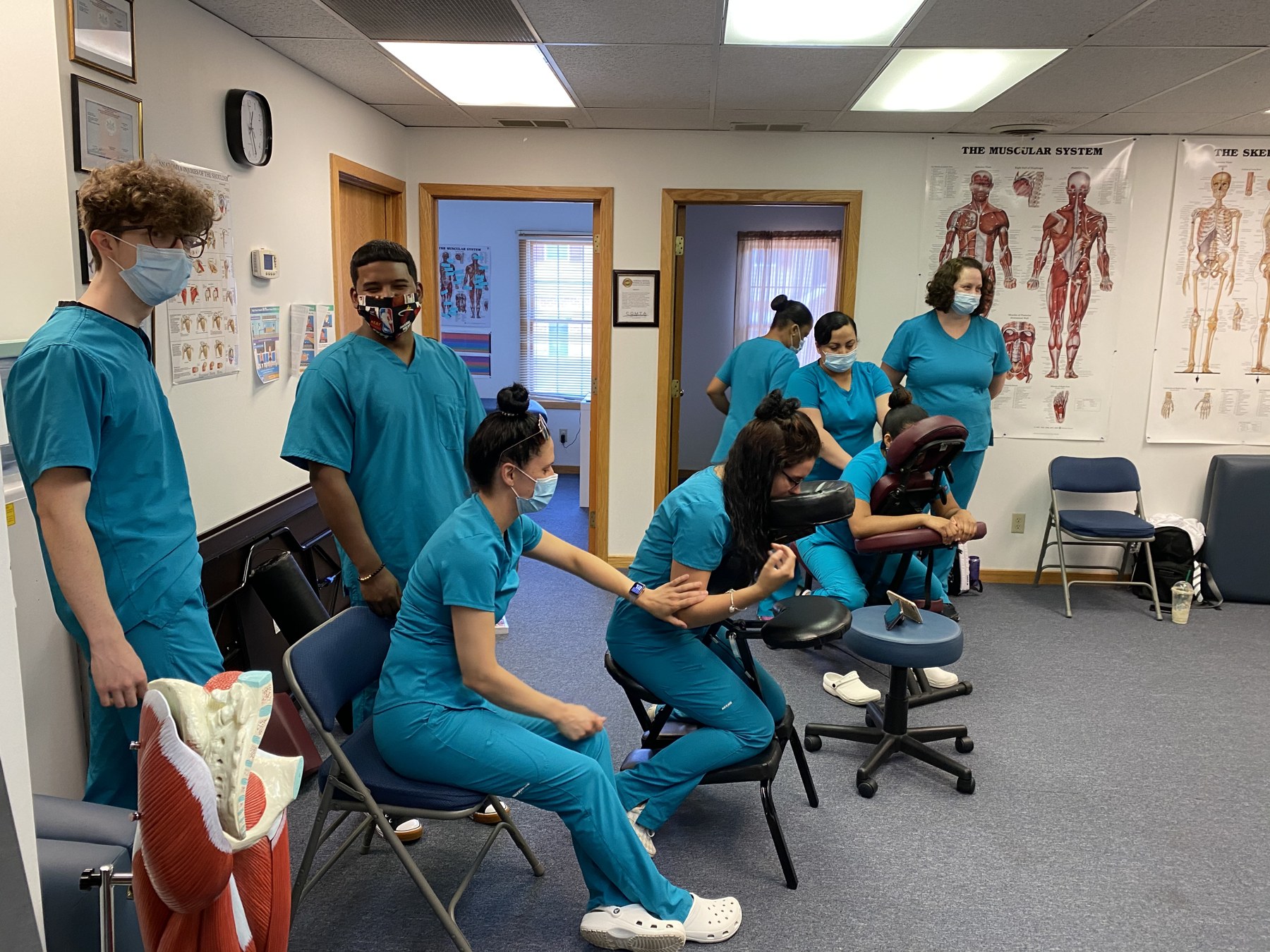
Specialty modalities introduces additional ways to work with soft tissue and movement, expanding students’ practical choices beyond their foundational training. The curriculum includes myofascial techniques, seated massage, aromatherapy, hydrotherapy, trigger-point work, deep tissue, orthopedic massage, reflexology and hot stone techniques. Students also explore side-lying positioning and adaptations relevant to prenatal, geriatric and oncology settings. Written and practical learning encourages students to select and adapt techniques thoughtfully, with attention to the client’s needs, appropriate precautions and massage therapy’s scope of practice.
These courses prepare students for the responsibilities of professional practice as well as hands-on care. Ethics covers boundaries, confidentiality, legal responsibilities, scope of practice and professional conduct through discussion and applied situations. Business Mastery explores employment and independent practice, marketing, customer service, recordkeeping, taxes, billing and business planning; students prepare and present an individual business plan. CPR/AED training introduces adult emergency-response skills, including cardiopulmonary resuscitation and use of an automated external defibrillator, as part of the program’s preparation for professional responsibilities.
The supervised clinic gives students an opportunity to bring classroom learning into a real client-care setting with instructor guidance and mentoring. The 125-hour clinic allocation includes 60 hands-on hours, 60 assessment and documentation hours, and 5 introduction hours. Students practice communicating with clients, assessing their massage-related needs, planning and providing sessions, and maintaining professional and confidential records. The experience also introduces the everyday responsibilities of a massage practice, including scheduling, customer service and equipment care, while students develop confidence and professional accountability.
COURSE HOURS
Course names and hours from the school-approved lesson plan. Repeated course entries are separate teaching blocks.
Total: 600 hours. Day groupings reflect the supplied lesson plan. Contact admissions for current dates and schedules.
PUT LEARNING INTO PRACTICE
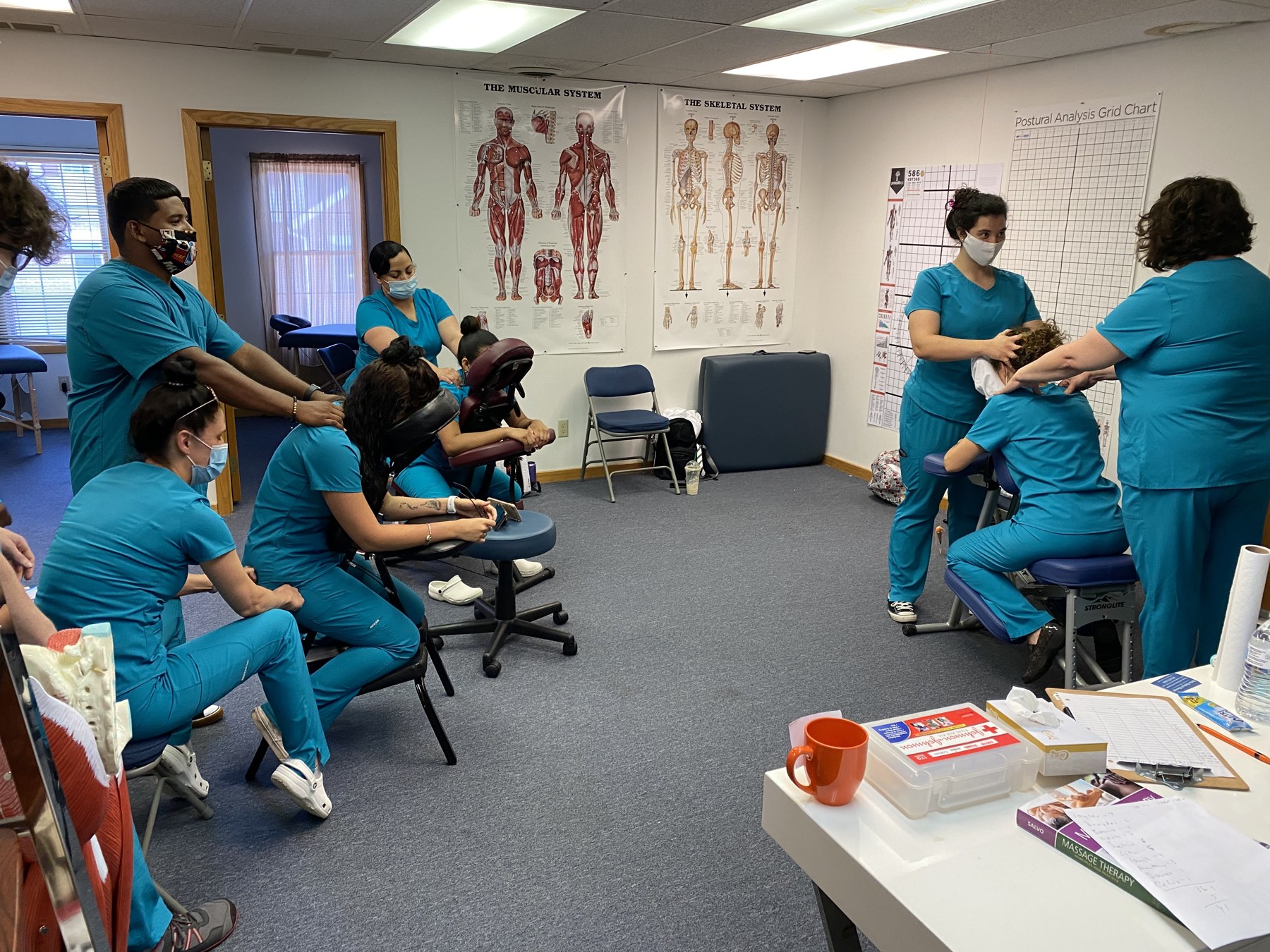
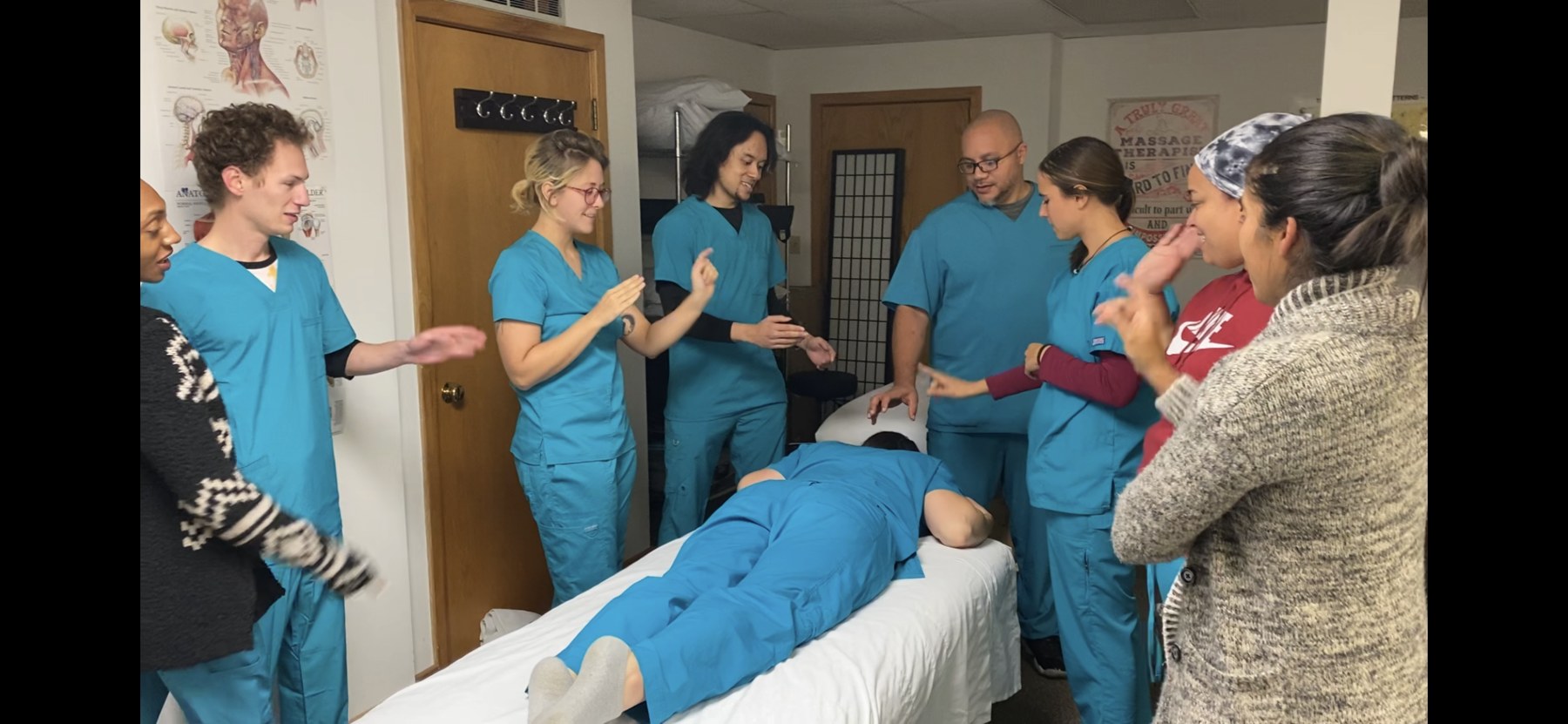
Learn by seeing, discussing and doing.
Massage education includes giving and receiving massage as part of supervised instruction. Discuss the physical expectations, participation requirements and accommodations with admissions.
Understand admissionsPLAN YOUR EDUCATION
Ask about current day and evening cohorts, attendance requirements, holidays and make-up options.
Review tuition and cost questions → Understand fees, supplies and funding before enrolling.
Program completion and professional licensure are separate steps. Discuss the current exam and state requirements with the school.
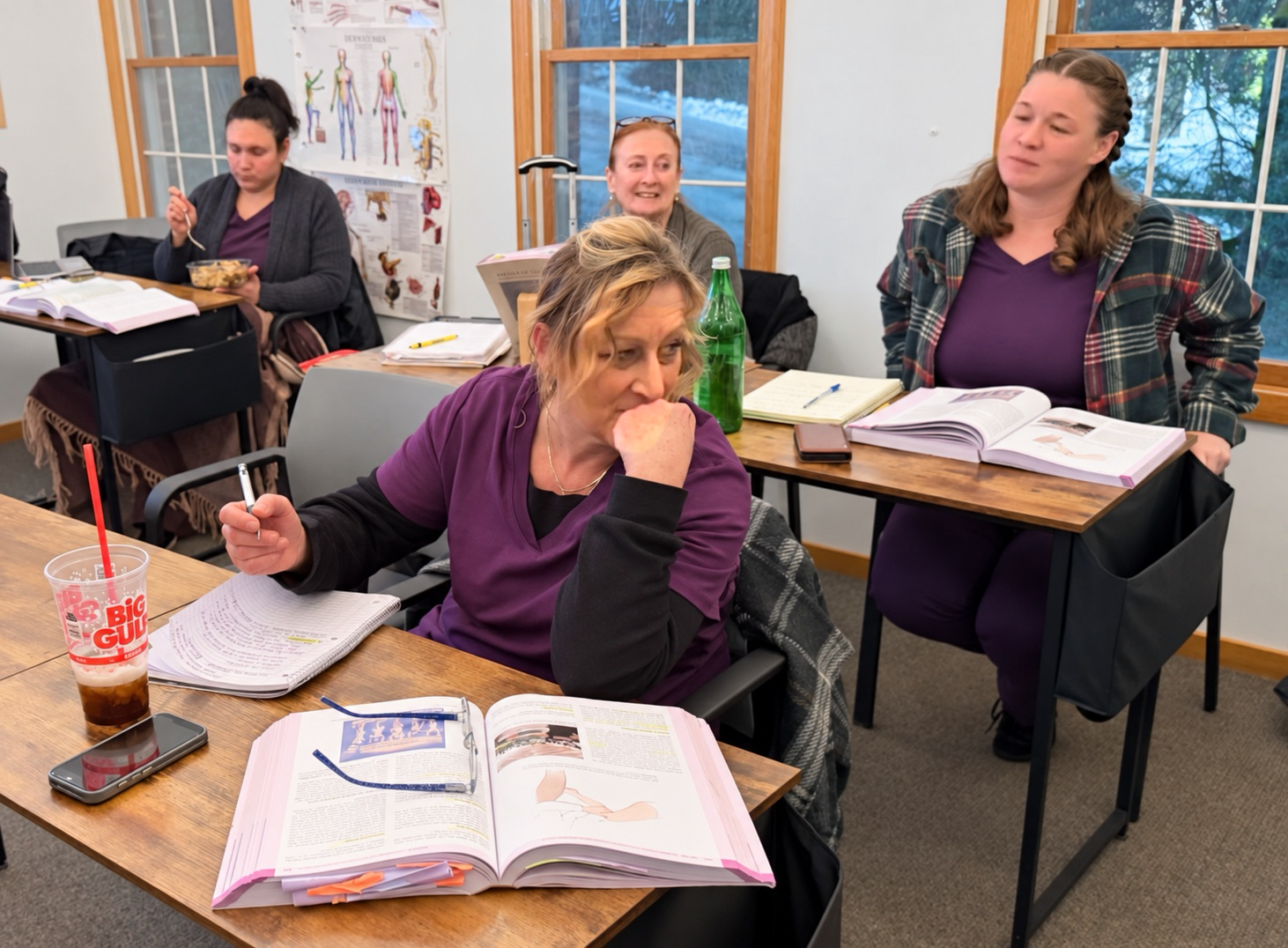
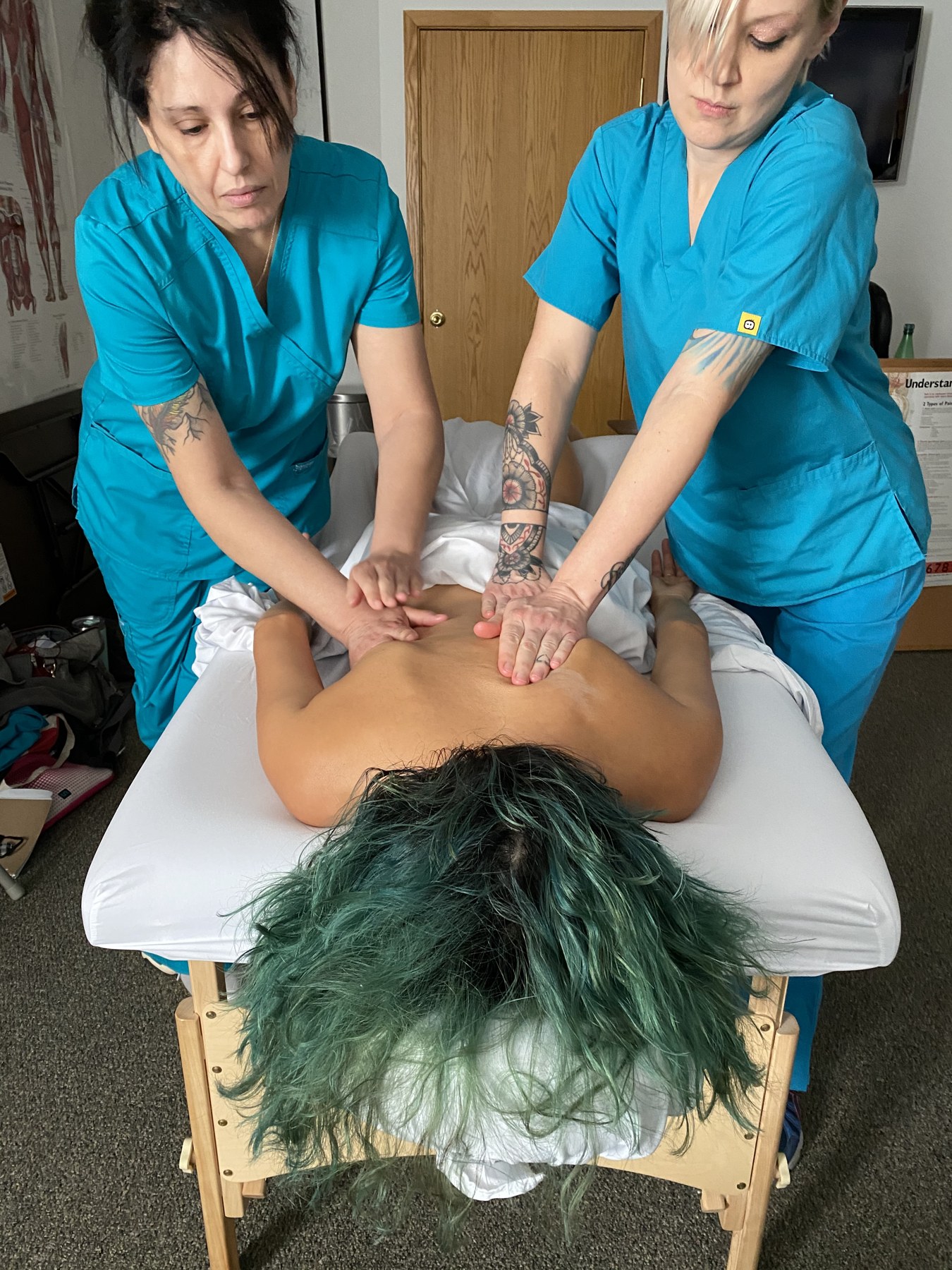
SKILL. PURPOSE. POSSIBILITY.
Explore medical massage education with EMSOM.
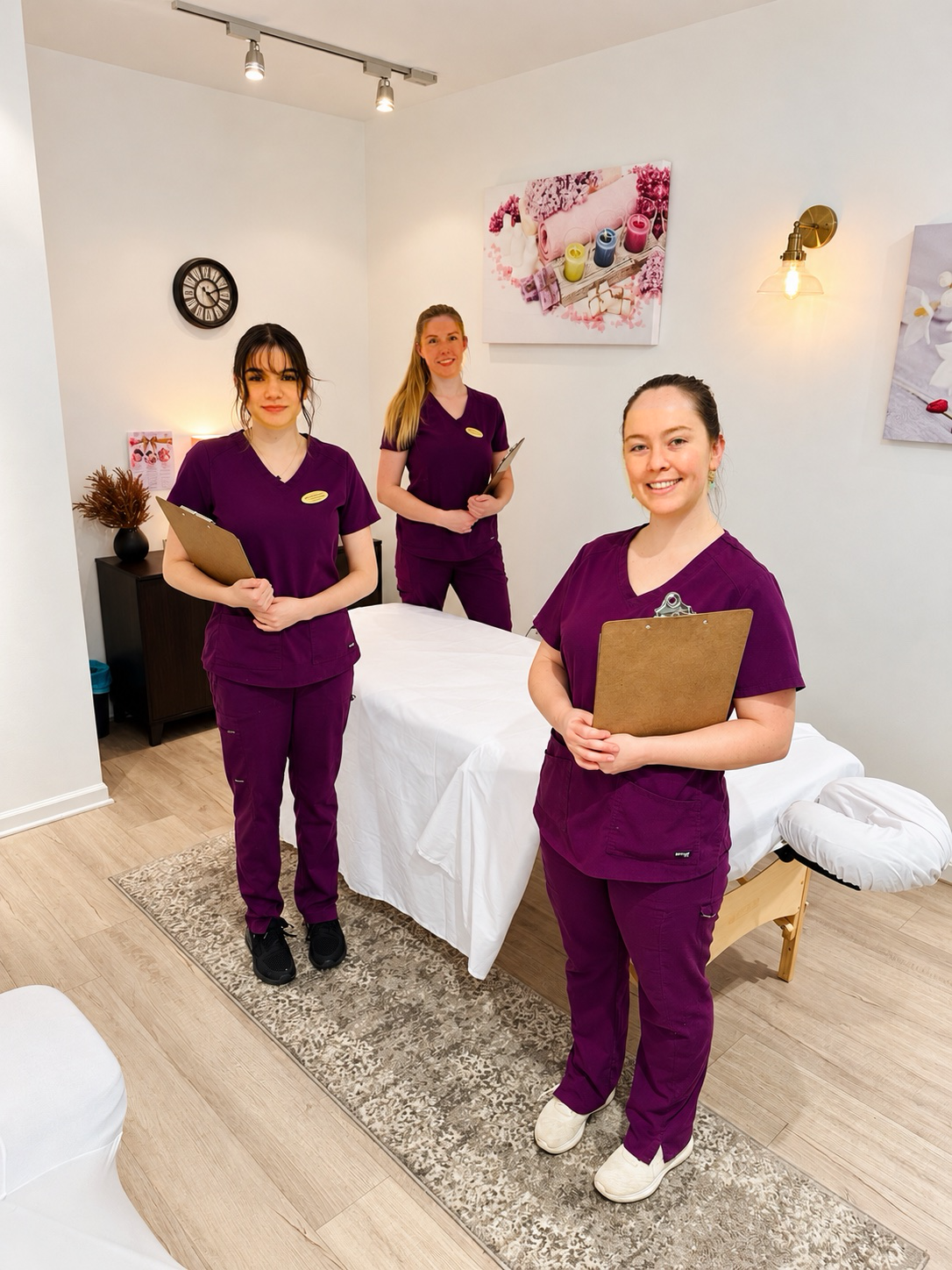
Training includes Swedish massage, medical and clinical massage, British sports therapy, deep tissue, trigger-point therapy, myofascial work, orthopedic massage, reflexology, hot stone, seated massage, aromatherapy and hydrotherapy. Special-population training includes oncology, prenatal, postnatal and geriatric approaches. Clinical techniques include soft-tissue release and facilitated stretching. Lymphatic drainage is included in the educational objectives. Thai massage is not offered.
The program includes 20 hours of Business Mastery and 20 hours of Ethics. Prepare for professional communication, client consent, boundaries and practice management. Ask admissions for the detailed coverage of marketing, taxes, liability insurance and starting a private practice.
The program includes 475 classroom hours and 125 clinic hours. Clinic training consists of 60 hands-on hours, 60 assessment and documentation hours, and 5 introduction hours. Classroom practice is separate from this clinic allocation.